The Importance of the Two-Bucket Challenge


The Path to Professional Car Washing
At the professional level of car washing, or what is known as detailing, the quality is not solely determined by the price of the equipment or the cleaning solutions. Having high-quality products without the correct usage methods will prevent one from reaching the level of “professionalism”.
Detailing is not merely about removing dirt from the exterior surface; it is a science dedicated to protecting and restoring the material integrity of the car, particularly the clear coat layer, which is only a few microns thick and is the most vulnerable part to environmental conditions. The fundamental difference between general car washing and professional car washing lies in recognizing the risk of scratches or Swirl Marks. Over 95% of this damage results from incorrect washing techniques. Therefore, we must first understand the car care process from the ground up to recalibrate our understanding.

Temperature and Environmental Factors Affecting Car Washing
Before starting any process, environmental factors should be assessed first. For car wash solutions and shampoos to work most effectively, the car’s surface must be completely cool, with no heat present on the car’s body, whether from sun exposure or direct sunlight. This is because the solvents and shampoos will evaporate rapidly, causing the highly concentrated chemicals to dry, leaving stubborn stains or causing corrosion on the paint layer. This damage can be severe enough to permanently destroy the lacquer layer.
In Thailand, with its high heat and fluctuating humidity, keeping the surface cool is challenging but essential. Cleaning in the early morning or evening is recommended to maintain the Dwell Time (the duration the product remains in liquid form on the surface) long enough for the chemicals to fully react with the dirt.

Always Start with Tires and Wheels
The first rule after checking the environmental conditions is to begin washing or cleaning the wheels and tires before any other areas. This area is a gathering point for Brake Dust, which contains metallic components that are both hot and sharp, potentially causing marks on the car’s surface. It may also include oil stains and asphalt from the road. Cleaning the wheels first prevents severe dirt from splattering onto the newly washed paint, thereby reducing the chance of cross-contamination.
The Key to Minimizing Scratches
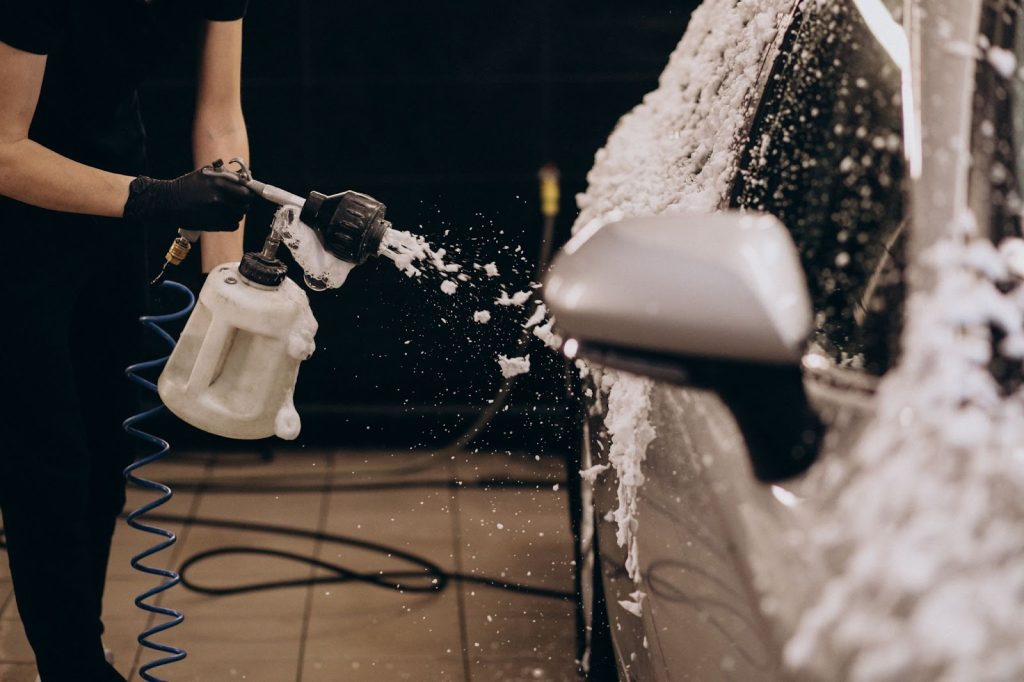
Pre-Wash is crucial for initiating a touchless clean of the paint surface to reduce the risk and occurrence of scratches from sources of contamination like small grains of sand or grit that might occur when dragging a wash mitt across the car’s body.
The Pre-Wash process begins by spraying the car with high-pressure water. This is followed by Snow Foam or high-density foam to cover the entire car. This loosens the dirt from the car’s surface as the foam slowly runs down the car.

The Two-Bucket Method: The Secret of Professionals
After completing the initial Pre-Wash process to clear the surface, we move on to the next step: the Two-Bucket Method, which is widely recognized as the safest way to maintain the car’s paint condition.
The Two-Bucket system consists of:
- Wash Bucket : Contains water mixed with car wash shampoo, such as Munwow Nano Foam, Munwow Ceramic Shampoo, or Munwow Care Shampoo, in an appropriate amount to reduce friction between the wash mitt and the car’s paint.1
- Rinse Bucket : Contains clean water for rinsing dirt and debris from the wash mitt before dipping it back into the shampoo.
A Grit Guard (ตะแกรงดักตะกอน) should be installed in both buckets. This device separates sand and grit, forcing them to settle at the bottom of the bucket, preventing them from floating back up and contaminating the water above. When the wash mitt touches the car and picks up dirt, rinsing and rubbing it on the Grit Guard in the Rinse Bucket ensures that the contamination is not transferred back onto the car in the next step.

Always Work from Top to Bottom
Washing must start from the roof and gradually move down to the hood, windows, and body panels, in that order. The important point is that the pressure applied must only come from the microfiber wash mitt, such as the Munwow B&W Wash Mitt, not from our force. The motion should be unidirectional, not circular, to prevent the formation of swirl marks on the car’s surface.
Addressing Stubborn Stains
If you feel roughness when rubbing the paint during washing, it indicates that iron fallout, tar, or paint overspray may be embedded on the car. The process for removing these stains is divided into two levels: chemical and physical.
Chemical Decontamination
This involves using specialized solutions, such as brake dust remover (Munwow Ferrox), sprayed thoroughly over the car to extract metal particles embedded in the lacquer layer. Munwow Tar Remover is used to dissolve sticky residue from crude oil or tree sap. Chemical removal minimizes surface contact and prepares the paint for claying.

Mechanical Claying
This involves using detailing clay, or Munwow Mini Clay Block, with a lubricant (Clay Lubricant) or a car wash shampoo that provides lubrication during use. This prevents the clay from sticking to the paint and minimizes the chance of creating scratches during use. By gliding the clay over the paint surface, it clears the roughness to make the paint smooth.
The Final Step: Safe Drying
Allowing the car to air dry naturally leads to the formation of Water Spots. These are caused by minerals in the water left behind after evaporation, which can corrode the paint layer. Therefore, the professional drying process must focus on water absorption without friction.

The Most Effective Drying Techniques Include:
- Sheeting Method : Using a hose without a nozzle to let water flow over the car from top to bottom. The water sheets together, pulling most of the water droplets off by gravity, reducing the amount of water that needs to be wiped by over 70%.
- Forced Air : Using a hot air blower or car dryer to expel water from crevices such as side mirrors, emblems, and wheel lug nut areas to prevent subsequent dripping.
- Blotting technique : Instead of dragging the towel across the surface, spread a large microfiber towel, such as Munwow Extra Dry, over the surface and press lightly to allow the towel to absorb the water.
The Final Step is Protection
Once the car is clean and dry, the final step is to create a barrier to protect the paint from UV radiation, bird droppings, and pollution.
The protection methods are categorized as follows:
- Carnauba Wax : Enhances gloss and depth of the paint but is less effective for stain protection.
- Synthetic Sealant : Offers better heat resistance and UV protection than natural wax.
- Ceramic Coating : Provides maximum surface hardness and excellent water-repelling (Hydrophobic) properties.
Professional waxing emphasizes applying the wax as “thinly as possible” to make removal easy and reduce residue.

Professional and correct car washing is not just about cleaning, but about risk management, selecting appropriate chemical products, and working systematically in every step. From starting at the wheels, performing an intensive Pre-Wash, using the Two-Bucket system for washing the body, to safe drying, and appropriate protective coating for the climate. This attention to detail will not only keep the car looking brand new but also preserve and increase the asset’s value in the long term. Following these international standards transforms ordinary car washing into true expert-level car maintenance.
